English
 العربية
 Nederlands
 Français
 Deutsch
 Italiano
 日本語
日本語 한국어
한국어 Polski
 Português
 Русский
 Español




High-precision electronic testing equipment demands absolute signal integrity and thermal stability, making an extruded aluminum desktop enclosure the definitive hardware solution over standard plastic or steel alternatives. By providing a natural Faraday cage for superior EMI/RFI shielding, acting as a massive passive heat sink for internal processors, and delivering exceptional structural ergonomics, aluminum enclosures directly eliminate measurement interference. This engineered approach drastically prolongs the lifespan of sensitive lab instruments, ensuring consistent, professional-grade diagnostic performance in any global laboratory or factory setting.

The Hidden Threats to Precision Measurement
In modern electrical engineering labs, testing and calibration environments are increasingly crowded. Oscilloscopes, spectrum analyzers, network testers, and power supplies are often stacked or placed side-by-side on workbenches. This density creates a hostile environment for sensitive measurements. Electromagnetic interference (EMI) and radio-frequency interference (RFI) from neighboring devices can easily penetrate poorly designed plastic casings, injecting ghost signals, static, and voltage spikes into your readings.
Furthermore, standard enclosures frequently fail to provide the necessary mechanical stability. A premium bench-top instrument housing must stay firmly in place when technicians plug and unplug heavy test probes or turn stiff rotary dials. Aluminum delivers the perfect weight distribution to prevent sliding, coupled with a professional, high-end aesthetic that reassures end-users of the instrument's quality.
Silent Thermal Management for Lab Environments
Testing equipment, especially variable power supplies and high-frequency signal generators, produces considerable heat under load. If trapped inside a plastic shell, this heat degrades capacitors, induces thermal drift in precision resistors, and skews calibration. To combat this, many designs resort to internal cooling fans, which introduce unwanted acoustic noise and mechanical vibration into quiet lab spaces.
Deploying a desktop aluminum enclosure solves this problem elegantly. Extruded aluminum boasts excellent thermal conductivity, naturally drawing heat away from internal components and dispersing it across the outer surface area. This passive thermal management allows for fanless, completely silent operation—a highly valued feature for engineers conducting long-term data logging and delicate acoustic testing.
Bridging the Gap: Custom Integration with YONGU
Transitioning a brilliant electronic circuit into a finished, market-ready bench-top product often hits a major bottleneck: the mechanical housing. Attempting to manually drill and modify generic metal boxes for complex arrays of BNC connectors, LCD screens, USB ports, and ventilation slots results in misalignments, sharp burrs, and a compromised exterior finish.
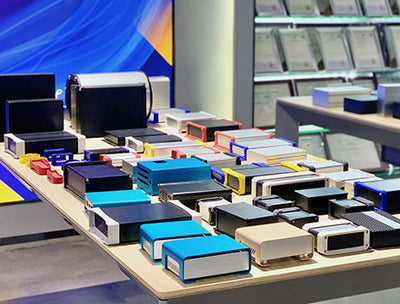
To eliminate these integration hurdles, engineering teams turn to YONGU. Specifically designed for laboratories and R&D centers, YONGU provides highly engineered infrastructure solutions. When developing an electronic test equipment case, you can leverage YONGU’s extensive modular designs, such as their dedicated desk equipment series.
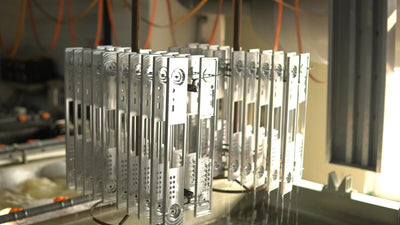
Instead of struggling with manual modifications, clients benefit from YONGU's comprehensive in-house CNC machining and custom surface finishing (including sandblasting and vibrant anodizing). By simply providing your CAD files, YONGU guarantees that every port, display window, and mounting point is milled with micron-level precision. Your chassis arrives perfectly tailored, dramatically accelerating your assembly process and elevating the professional appeal of your test gear.

Material Comparison for Bench-Top Instruments
To help R&D developers and procurement managers understand why aluminum is the industry standard for lab equipment, the following table benchmarks common enclosure materials against critical performance metrics:
| Performance Metric | Extruded Aluminum (Recommended) | Standard ABS Plastic | Cold Rolled Steel |
|---|---|---|---|
| EMI/RFI Signal Shielding | Exceptional (Forms a natural Faraday cage) | None (Requires internal conductive coating) | High (Best for low-frequency magnetic noise) |
| Thermal Management | Superior (Acts as a built-in passive heatsink) | Very Poor (Traps internal heat) | Poor |
| Workbench Stability & Ergonomics | Excellent (Optimal weight, professional feel) | Poor (Too light, slides during operation) | Moderate (Can be unnecessarily heavy) |
| Custom CNC Machining | High Precision (Clean edges for display panels) | Good (But can crack or melt during milling) | Moderate (Requires tougher tooling) |
| Aesthetic & Brand Image | Premium (Supports anodizing and laser etching) | Consumer-grade (Looks cheap) | Utilitarian (Prone to scratching and rust) |
Securing Precision in Every Measurement
In the realm of electronic testing and measurement, the enclosure is not just a container; it is an active component that dictates the accuracy, thermal stability, and lifespan of your instrument. By integrating a premium aluminum desktop chassis, you eliminate EMI vulnerabilities, ensure silent passive cooling, and deliver a user experience that exudes professional quality. Equip your lab hardware with the structural integrity it deserves to guarantee reliable results in every test.
Ready to Upgrade Your Testing Equipment Housing?
Do not let inadequate enclosures bottleneck your high-precision instruments. Partner with YONGU to access fully customized, CNC-machined, and thermally optimized desktop enclosures that perfectly fit your exact I/O and display requirements.