English
 العربية
 Nederlands
 Français
 Deutsch
 Italiano
 日本語
日本語 한국어
한국어 Polski
 Português
 Русский
 Español




Designing electronic hardware for healthcare and clinical environments demands a rigorous balance of electromagnetic compatibility (EMC), sterile cleanability, passive thermal management, and rugged mechanical protection. A precision-engineered medical device aluminum enclosure serves as the foundational standard for modern biomedical devices because it naturally satisfies these life-critical parameters: extruded aluminum forms an impenetrable Faraday shield against disruptive radio-frequency interference, enables fanless cooling to keep sterile rooms free of circulating pathogens, and supports medical-grade anodized finishes that resist harsh hospital disinfectants without degrading over time.

1. Strict EMI/RFI Shielding for Diagnostic Accuracy
Modern hospital environments are saturated with radio-frequency signals emitted by electrosurgical units, telemetry monitors, Wi-Fi networks, and MRI machines. In diagnostic devices—such as electrocardiographs (ECG), electroencephalographs (EEG), and bedside ultrasound monitors—even microvolt-level electromagnetic interference (EMI) can corrupt sensor readings, leading to misdiagnoses. High-conductivity aluminum alloys naturally attenuate high-frequency EMI and RFI noise. By designing seamless interlocking joints and conductive gasket channels, aluminum enclosures maintain continuous electrical bonding across all panels, ensuring strict compliance with global medical EMC standards like IEC 60601-1-2.
2. Passive Thermal Management for Silent, Sterile Operation
Unlike standard industrial equipment, medical electronics deployed in operating theaters and patient recovery wards must operate quietly and hygienically. Mechanical cooling fans pose two major risks: acoustic disturbance and the active circulation of airborne contaminants. Extruded aluminum possesses an exceptional thermal conductivity rating (~205 W/m·K), allowing the chassis body to act as an integrated heat sink. Internal heat generated by high-speed processors, power supplies, and laser drivers is efficiently drawn to the exterior surface and dissipated via passive convection, eliminating the need for fans.
3. Chemical Resistance, Cleanability, and Ingress Protection
Healthcare equipment must undergo frequent wipe-downs with aggressive disinfectants, including isopropyl alcohol, quaternary ammonium, hydrogen peroxide, and sodium hypochlorite solutions. Plastic housings often suffer from environmental stress cracking (ESC) after repeated chemical exposure, while untreated steel can rust at junction points. Anodized aluminum creates an inert, non-porous surface barrier that prevents chemical corrosion and bacterial adherence. Furthermore, precision-machined sealing grooves accommodate medical-grade silicone or EPDM O-rings, providing IP65 to IP67 ingress protection against fluid spills and sanitizing sprays.
4. Precision Customization and Ergonomics
Medical electronics frequently require non-standard mechanical layouts, including recessed cutouts for touchscreens, peristaltic pump mounts, Luer lock gas/fluid fittings, and custom I/O ports. Adapting a generic enclosure manually often introduces burrs, compromises dimensional tolerances, and damages surface finishes.
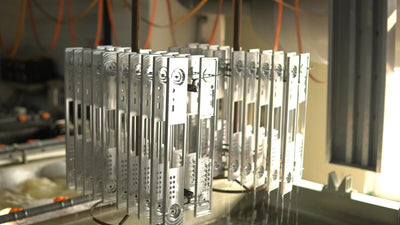
This is where partnering with an experienced manufacturing expert like YONGU becomes essential. When engineering portable diagnostic units or bedside monitoring hardware, deploying a dedicated healthcare equipment housing requires micron-level CNC machining accuracy. YONGU specializes in flexible, customizable aluminum solutions, offering tailored extruded profiles and full in-house fabrication. Through YONGU’s comprehensive CNC milling, precision laser engraving, and custom anodizing services, developers can specify exact port placements, internal PCB standoffs, and custom bezels to configure an aluminum medical instrument case that aligns with clinical ergonomics while accelerating time-to-market.

Material Suitability for Medical Device Housings
To assist biomedical engineers in selecting the proper construction material, the following table compares common enclosure substrates against core medical design criteria:
| Design Parameter | Extruded Aluminum Alloy | Stainless Steel (304/316) | Medical Plastics (ABS / PC) |
|---|---|---|---|
| Thermal Dissipation | Excellent (Enables fanless, silent cooling) | Poor (Traps heat internally) | Very Poor (Acts as a thermal insulator) |
| EMI/RFI Shielding | Superior (Inherent Faraday cage) | High (Effective against magnetic fields) | None (Requires secondary conductive spray) |
| Disinfectant Resistance | High (With hard/clear anodizing) | Superior (Highly inert) | Moderate (Prone to chemical stress cracking) |
| Weight & Ergonomics | Lightweight (Optimal for portable diagnostic tools) | Very Heavy (Cumbersome for mobile units) | Very Lightweight |
| Prototyping & Custom CNC | Fast and Cost-Effective | High Machining & Tooling Cost | Requires Expensive Injection Molds |
Elevating Clinical Performance with Specialized Enclosures
In healthcare hardware development, housing design is directly tied to device safety, diagnostic precision, and regulatory approval. Aluminum instrument enclosures dominate the medical technology sector because they uniquely solve the combined challenges of electromagnetic shielding, fanless heat dissipation, chemical durability, and structural reliability. Selecting an enclosure that integrates these engineering fundamentals ensures your device maintains peak performance across thousands of clinical cycles.
Ready to Develop Your Next Medical Device Enclosure?
Do not compromise patient safety and equipment reliability with off-the-shelf enclosures. YONGU delivers precision CNC-machined, thermally optimized, and chemically resilient aluminum housing solutions tailored to your exact biomedical specifications.