English
 العربية
 Nederlands
 Français
 Deutsch
 Italiano
 日本語
日本語 한국어
한국어 Polski
 Português
 Русский
 Español




Deploying critical infrastructure in harsh outdoor environments demands a protective housing that actively combats environmental degradation rather than just temporarily delaying it. An aluminum NEMA enclosure serves as the ultimate long-term safeguard for external electrical systems because it definitively solves the three primary causes of outdoor hardware failure: it is completely immune to the UV radiation that shatters plastics, it naturally resists the oxidative rust that destroys mild steel, and its highly thermally conductive chassis actively dissipates the dangerous internal heat that builds up within sealed, weatherproof environments. By standardizing on this material, engineers ensure regulatory compliance, zero-maintenance longevity, and uninterrupted electrical performance.
The Brutal Reality of Outdoor Electrical Deployments
City planners, telecommunications integrators, and renewable energy engineers face a uniquely hostile battlefield when mounting electronics outside. Once equipment leaves the climate-controlled data center and is mounted to a utility pole, solar array, or factory exterior, it is subjected to an unyielding assault from nature.
The first major threat is Ultraviolet (UV) radiation. Many project managers mistakenly specify heavy-duty polycarbonate or fiberglass enclosures to save on upfront costs. However, continuous exposure to direct sunlight rapidly breaks down the molecular bonds in these polymers. Within just a few years, a plastic outdoor electrical box will become heavily discolored, chalky, and brittle. A minor impact from a falling branch or a technician's dropped tool can shatter a UV-degraded plastic housing, instantly exposing live electrical terminals to pouring rain.
The second threat is moisture and atmospheric corrosion. Standard painted carbon steel boxes might pass initial inspections, but a single deep scratch during installation exposes the raw iron beneath. In coastal areas with salt spray, or industrial zones with acidic rainfall, red rust aggressively spreads under the paint, eventually eating completely through the metal and destroying the weather-tight seal.
The Thermal Paradox of Weatherproof Housings
Perhaps the most complex engineering challenge of outdoor deployments is the thermal paradox: how do you completely seal a box against water and dust while preventing the electronics inside from cooking themselves?
Modern outdoor equipment—such as 5G micro-cell routers, solar battery charge controllers, and traffic light PLCs—generates intense internal heat. When you place these devices inside a perfectly sealed, NEMA-rated plastic or fiberglass box, you effectively put them in a slow cooker. Because plastic is a thermal insulator, the internal heat cannot escape, and solar radiation hitting the outside of the box acts as a multiplier. Temperatures quickly skyrocket past 60°C (140°F), causing CPU throttling, bloated capacitors, and total system shutdown.
Aluminum is the definitive answer to this paradox. It possesses a thermal conductivity roughly five times higher than steel and vastly higher than any plastic. An aluminum enclosure acts as a massive, passive heatsink. It rapidly pulls heat generated by internal power supplies, combines it with the ambient air moving across its exterior, and sheds the thermal load without requiring vulnerable ventilation fans or louvers that would otherwise compromise the waterproofing.
Decoding NEMA Ratings for Extreme Environments
To guarantee protection, outdoor enclosures are tested against strict National Electrical Manufacturers Association (NEMA) standards. Understanding these ratings is critical for safe deployment:
- NEMA 3R: Designed for outdoor use to provide a degree of protection against falling dirt, rain, sleet, and snow. Often used for basic utility junction boxes.
- NEMA 4: Watertight and dust-tight. Protects against splashing water, seepage, and severe external condensation.
- NEMA 4X: Offers the exact same watertight and dust-tight protection as NEMA 4, but adds a strict requirement for corrosion resistance.
Because bare aluminum naturally forms a protective oxide layer the millisecond it is exposed to oxygen, it is heavily favored for achieving the highly coveted NEMA 4X rating without relying on fragile external paint layers.
Maintaining Compliance Through Precision Manufacturing
A fatal mistake many field technicians make is purchasing a certified enclosure and then taking a hand-drill to it on the job site to add cable glands or antenna mounts. Manually drilling holes introduces metal shavings into the chassis, creates uneven edges that prevent waterproof gaskets from seating properly, and instantly voids the enclosure’s NEMA certification.
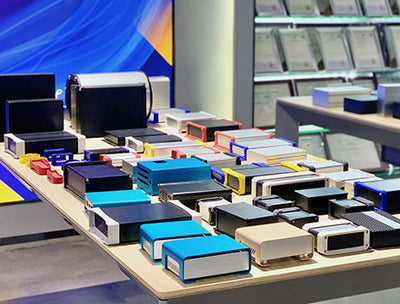
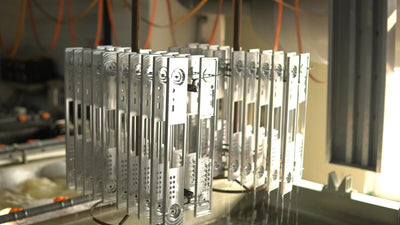
To preserve structural integrity and environmental compliance, professional system integrators partner directly with manufacturers like YONGU. Rather than risking field modifications, engineers can specify a NEMA rated aluminum enclosure completely customized from the factory. YONGU leverages advanced die-casting and precise CNC machining centers to pre-mill every necessary cable entry point, HMI display window, and mounting bracket according to your exact CAD files. By matching these precision cutouts with high-grade silicone or polyurethane poured-in-place gaskets, YONGU delivers a highly tailored, anodized enclosure that maintains strict NEMA watertight standards directly out of the box, ready for rapid, secure deployment.

Material Comparison for Outdoor Enclosures
To assist procurement teams and infrastructure designers, the following data table compares the real-world outdoor performance of common enclosure materials:
| Environmental Threat / Material | Die-Cast / Extruded Aluminum | Carbon Steel (Painted) | Fiberglass / Polycarbonate |
|---|---|---|---|
| UV Radiation (Sunlight) | Absolute Immunity (Zero degradation) | High (Paint may chalk over time) | Very Poor (Becomes brittle, cracks, and yellows) |
| Corrosion & Rust | Exceptional (Natural oxide layer prevents deep rust) | Poor (Scratches lead to rapid red rust failure) | Exceptional (Cannot rust) |
| Passive Heat Dissipation | Superior (Acts as a natural heatsink) | Moderate (Retains some heat) | Terrible (Acts as a thermal insulator) |
| Impact Resistance (Vandalism/Hail) | High (Dents rather than shatters) | Exceptional | Low (Can shatter if UV damaged) |
| EMI/RFI Shielding | Inherent (Natural Faraday cage) | High (Great for magnetic interference) | None (Requires expensive internal coating) |
Frequently Asked Questions (FAQ)
Q1: What is the difference between a NEMA 4 rating and an IP66 rating?
A: Both denote high-level protection against dust and powerful water jets (hose-down). However, NEMA standards additionally test for construction practices, corrosion resistance, and the enclosure's ability to withstand ice formation on its exterior without operational damage. NEMA is primarily used in North America, while IP is international.
Q2: Will an aluminum NEMA enclosure survive in coastal, high-salt environments?
A: Yes, particularly if it is designated as NEMA 4X. While bare aluminum performs well, applying a professional surface treatment such as hard-coat anodizing or a specialized powder coat (which YONGU provides) makes it virtually impervious to oceanic salt spray and humidity.
Q3: Does the enclosure come with a mounting bracket for utility poles?
A: Standard boxes often just have flat backs, but by using custom manufacturing services, heavy-duty aluminum flanges and pole-mount brackets can be integrated or bolted onto the chassis with watertight sealed threads, allowing for safe elevated installation.
Secure Your Outdoor Infrastructure Today
Do not let brutal weather, corrosive environments, or trapped internal heat destroy your expensive outdoor electronics. Upgrade to a precision-machined, thermally superior aluminum enclosure designed to outlast the equipment inside it.