English
 العربية
 Nederlands
 Français
 Deutsch
 Italiano
 日本語
日本語 한국어
한국어 Polski
 Português
 Русский
 Español




To choose correctly between a 3U and 4U rackmount enclosure, evaluate your hardware clearance, GPU requirements, and thermal demands: Select a 3U rackmount chassis (5.25 inches / 133.35 mm height) if you want to optimize cabinet space density while accommodating standard ATX motherboards and up to 2 PCIe expansion cards. Choose a 4U enclosure (7.0 inches / 177.80 mm height) if your application requires multi-GPU setups (such as AI training, deep learning, or video walls), ultra-quiet 120mm+ cooling fans, standard ATX PSUs, and maximum hot-swappable drive capacity.
3U vs 4U Rack Case Comparison: Key Specifications
A detailed rack case comparison reveals distinct structural trade-offs between physical footprint, thermal headroom, and component compatibility. While both chassis types adhere to the standard 19-inch rack format, their height differences dictate airflow dynamics and expansion limits.

| Specification / Feature | 3U Rackmount Chassis | 4U Rackmount Enclosure |
|---|---|---|
| Vertical Height | 5.25 inches (133.35 mm) | 7.00 inches (177.80 mm) |
| Cabinet Density (42U Rack) | Up to 14 units | Up to 10 units |
| GPU & Expansion Support | 1–2 cards (may require horizontal riser) | 3–4 full-height, full-length enterprise GPUs |
| Cooling Fan Support | 80mm to 92mm high-static fans | 120mm to 140mm quiet, high-CFM fans |
| Drive Bay Capacity | 4–8 x 3.5" or 2.5" bays | 8–24+ hot-swappable bays |
| PSU Form Factor | Micro-ATX, 2U Redundant, or Horizontal ATX | Standard PS2 ATX, 2U/3U Redundant PSUs |
| Typical Use Cases | Edge computing, broadcast AV, medium network nodes | AI/ML workstations, rendering nodes, NAS/SAN storage |
Deep Dive: When to Choose a 3U Rackmount Chassis
The 3U form factor offers a sweet spot for engineering teams needing more space than a slim 1U/2U case without giving up excessive cabinet real estate. Using a 3U enclosure allows data centers and equipment integrators to fit nearly 30% more server instances per 42U rack compared to 4U configurations.
Key Advantages of 3U Enclosures:
- Rack Space Efficiency: Conserves 1.75 inches (1U) of vertical space per unit, significantly improving cabinet utilization in colocation environments.
- Motherboard Flexibility: Effortlessly fits Mini-ITX, Micro-ATX, and standard ATX motherboards with medium-height CPU air coolers.
- Effective Heat Dissipation: Accommodates 80mm high-airflow fan walls capable of cooling typical 125W–150W server CPUs effectively.
Deep Dive: When to Choose a 4U Enclosure
When high computational density, heavy GPU processing, and acoustic comfort are essential, a 4U enclosure is the industry benchmark. The additional vertical space eliminates off-the-shelf component height restrictions, allowing standard desktop components to be integrated directly into rack environments.
Key Advantages of 4U Enclosures:
- Full-Height Multi-GPU Clearance: Easily houses multiple full-length, full-height graphics cards (such as NVIDIA RTX 4090 or enterprise AI accelerators) vertically without right-angle PCIe risers.
- Whisper-Quiet Operation: Fits large 120mm or 140mm fans that deliver higher CFM airflow at lower fan speeds (RPM), making it ideal for studio and office deployments.
- Standard Power Supply Integration: Accommodates standard desktop ATX power supplies directly, lowering hardware sourcing and replacement costs.
Decision Matrix: How to Choose for Your Project
To finalize your choice, evaluate these practical considerations:
- PCIe Expansion Height: If you rely on full-height GPU cards without risers, choose 4U. If you use low-profile cards or single vertical riser cards, 3U is sufficient.
- Noise Sensitivity: For noise-sensitive environments like recording studios or broadcast control rooms, 4U cases with 120mm fans are significantly quieter.
- Rack Space Costs: If rack cabinet space is limited or expensive, 3U enclosures maximize spatial efficiency.

Why YONGU Custom Aluminum Rack Enclosures Lead the Market
Whether your deployment requires a space-saving 3U layout or a heavy-duty 4U GPU workstation, enclosure material and manufacturing precision determine thermal efficiency, structural rigidity, and longevity.
At YONGU Case, we manufacture high-precision extruded aluminum 19-inch rackmount enclosures engineered for demanding industrial, audio-visual, and networking applications:
- Superior Heat Dissipation: High thermal conductivity aluminum acts as a passive heatsink, lowering operating temperatures by up to 15% compared to conventional steel chassis.
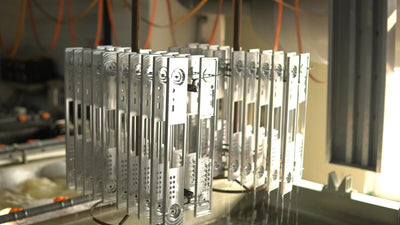
- Precision CNC Machining: Tailor-made front panel cutouts, precise port openings, and branded anodized or powder-coated surface finishes.
- Modular Lightweight Engineering: High-strength extruded aluminum offers high durability with significantly lower shipping weight and easier rack installation.
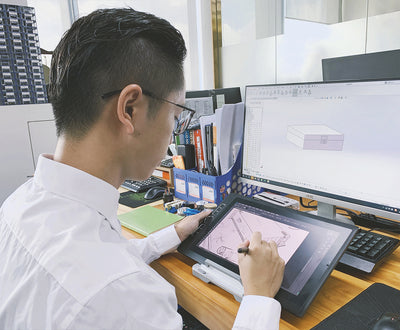
- Rapid OEM/ODM Customization: Fast turnaround times from initial 3D design to prototype production, supporting low to high-volume custom orders.
Conclusion: Make the Smart Choice for Your Rack System
Choosing between a 3U vs 4U rackmount enclosure comes down to balancing rack space density against component height and cooling performance. Opt for 3U when cabinet space is tight, and select 4U when you need uncompromised GPU performance, maximum storage, and whisper-quiet cooling.
Ready to customize or source high-performance aluminum rackmount enclosures for your next project? YONGU Case provides full OEM/ODM manufacturing, custom CNC cutouts, and specialized thermal solutions. Contact YONGU case experts today to request a custom quote and technical advice!