English
 العربية
 Nederlands
 Français
 Deutsch
 Italiano
 日本語
日本語 한국어
한국어 Polski
 Português
 Русский
 Español




When deciding between a 3U and 4U chassis, the defining factor is internal hardware geometry. A 3U chassis is the ultimate space-saving sweet spot for standard ATX motherboards with low-profile expansion needs. However, if your build requires standard 120mm cooling fans, massive full-height graphics cards (GPUs), or large standard ATX power supplies, upgrading to a 4U rackmount enclosure is functionally mandatory.

The Rack Real Estate Dilemma: Balancing Space and Power
For data center architects, IT managers, and audio-visual engineers, rack space is an expensive commodity. Every single rack unit (U) you occupy costs money in hosting fees and physical footprint. The natural instinct is to cram the highest possible computing power into the smallest possible chassis.
However, this creates a severe engineering pain point. If you buy a case that is too small, your full-sized PCIe cards physically will not fit, your high-end processors will thermal throttle due to poor airflow, and you will be forced to buy expensive, loud, specialized server power supplies. Suddenly, the money you saved on rack space is completely wasted on proprietary hardware and cooling nightmares. To build an efficient system, you must conduct a thorough rack case comparison before purchasing.
Decoding the Dimensions: 3U vs 4U
A standard Rack Unit (U) is defined as 1.75 inches (44.45 mm) in height. Therefore:
- 3U Chassis: 5.25 inches (133.35 mm) tall.
- 4U Chassis: 7.00 inches (177.80 mm) tall.

While a 1.75-inch difference may seem trivial on paper, in hardware integration, it changes the entire ecosystem of components you can use.
1. PCIe Expansion and GPU Clearance
This is the most critical difference. A 3U chassis cannot accommodate a standard, full-height PCIe card (like an RTX graphics card or a large network capture card) mounted vertically. You must either use low-profile expansion cards or install complex PCIe riser cables to mount your standard cards horizontally. A 4U rackmount enclosure, on the other hand, offers ample headroom. You can effortlessly plug full-sized, heavy enterprise GPUs directly into the motherboard exactly like a standard desktop PC.
2. Thermal Management and Fan Size
Cooling dictates performance. Because a 4U case is taller, it seamlessly fits standard 120mm case fans. Larger fans push a massive volume of air (CFM) while spinning at lower RPMs, resulting in whisper-quiet operation. Conversely, a 3U case is restricted to 80mm or 92mm fans. To achieve the same cooling performance, these smaller fans must spin at a much higher RPM, creating a noticeable high-pitched whine that can be disruptive if the rack is near a human workspace.
3. Power Supply (PSU) Compatibility
Most standard ATX power supplies fit effortlessly into a 4U enclosure in a traditional vertical orientation. In a 3U configuration, mounting a standard ATX PSU can be tricky; it usually must be mounted horizontally (taking up valuable motherboard space) or you must utilize a smaller SFX or specialized 2U/3U server power supply.
Comprehensive Rack Case Comparison Table
| Feature | 3U Chassis | 4U Rackmount Enclosure |
|---|---|---|
| Total Height | 5.25 inches (133.35 mm) | 7.00 inches (177.80 mm) |
| Max Cooling Fan Size | 80mm / 92mm | 120mm (Optimal airflow & low noise) |
| PCIe / GPU Compatibility | Low-profile only (or horizontal w/ risers) | Standard full-height (Direct vertical plug) |
| Power Supply Format | SFX, 2U/3U Server, or Horizontal ATX | Standard Vertical ATX / Redundant PSU |
| Best Application Scenario | Web hosting, storage arrays, shallow AV racks | AI workstations, multi-GPU rendering, heavy industrial nodes |
The Technical Scenario: When Standard Cases Fall Short
Imagine you are tasked with building a custom edge-computing node for an industrial automation facility. You realize that a 4U case is mechanically perfect for your dual-GPU layout. However, there is a major problem: your proprietary motherboard requires custom mounting standoffs, and the front panel must feature custom cutouts for specialized aviation-grade sensors and an integrated LCD status screen. An off-the-shelf, mass-produced server case will simply not align with your hardware, forcing you into expensive, messy DIY modifications that compromise the structural integrity of the chassis.
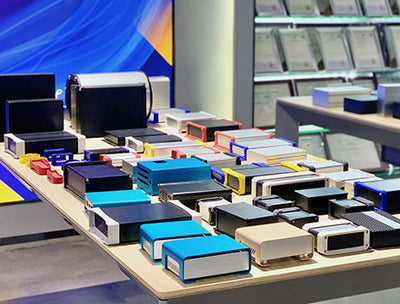
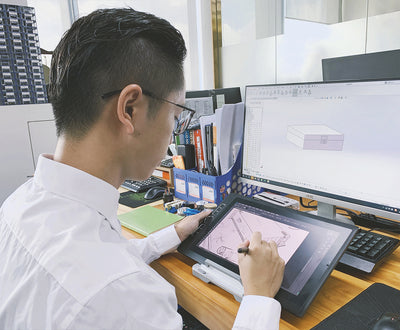
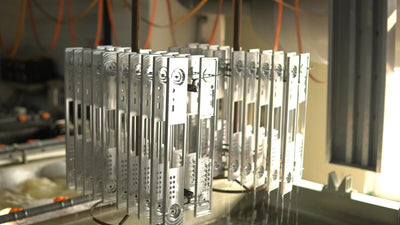
This is where engineering precision becomes non-negotiable. Instead of compromising your internal architecture, you can rely on professional-grade customization from YONGU. Whether you require a sleek, space-efficient 3U chassis or a heavy-duty 4U rackmount enclosure, YONGU provides exceptional aluminum server cases designed for industrial-grade durability. More importantly, YONGU offers complete CNC customization. From precise I/O shield milling to custom ventilation patterns and bespoke front-panel designs, YONGU ensures that the enclosure conforms perfectly to your advanced hardware, rather than forcing your hardware to conform to a generic box.
Frequently Asked Questions (FAQ)
1. Can a 3U chassis fit a standard desktop graphics card?
Not vertically. Standard full-height graphics cards are too tall for a 3U case. You will need to use a low-profile graphics card, or purchase a specialized PCIe riser cable to mount the full-sized GPU horizontally across the motherboard.
2. In a rack case comparison, which is quieter: 3U or 4U?
A 4U rackmount enclosure is generally significantly quieter. Because it has the vertical space to accommodate standard 120mm fans, it can push a massive amount of cooling air at low fan speeds. A 3U case relies on smaller fans that must spin faster and louder to achieve the same cooling effect.
3. Why should I choose a custom 4U rackmount enclosure for my business?
A custom 4U enclosure allows for uncompromised performance. It naturally fits large cooling solutions, high-wattage ATX power supplies, and multiple full-height expansion cards, making it ideal for high-end AI processing, rendering nodes, and intensive data storage solutions.
Build Your Perfect Rackmount Solution Today
Do not let generic cases bottleneck your server's performance or ruin your custom hardware layout. Secure your processing power inside an enclosure that guarantees maximum airflow, flawless structural rigidity, and exact precision fitment. Ready to deploy your next custom server rack project? Contact us at YONGU today to discuss your specific mechanical dimensions, and let our engineering team CNC machine the ultimate server chassis for your technology!