English
 العربية
 Nederlands
 Français
 Deutsch
 Italiano
 日本語
日本語 한국어
한국어 Polski
 Português
 Русский
 Español




In modern engineering and automation, migrating to a modular industrial PC enclosure is the ultimate strategy to guarantee system agility. By allowing seamless upgrades, accommodating universal standards (like PXI/PXIE), and drastically reducing maintenance downtime, modular chassis systems offer a scalable, future-proof, and cost-effective foundation for any rapidly changing technical environment.

The Pain Point: The "Static Hardware" Trap
As industrial automation, test measurement, and edge computing evolve, hardware requirements change at a breakneck pace. Yet, many facility managers and engineers are still trapping their highly advanced computing modules inside rigid, legacy enclosures. When a new I/O module needs to be added, or a different motherboard form factor is required, traditional welded chassis simply cannot adapt.
This limitation leads to several severe pain points:
- Exorbitant Downtime: Swapping out a rigid system often requires a complete teardown of the server rack, disrupting production lines and costing thousands of dollars per hour.
- Thermal Bottlenecks: As you pack more powerful processing units into a static box, airflow becomes restricted, leading to overheating and premature hardware failure.
- Wasted Rack Space: Without the ability to customize panel cutouts or easily swap between handle mounts and rack ears (such as transitioning from desktop testing to cabinet installation), engineers are forced to use mismatched setups that waste valuable cabinet space.

Unlocking Agility with Expandable Architecture
This is where the expandable chassis completely changes the paradigm. By breaking the enclosure down into a standardized, module-friendly frame structure, engineers gain unprecedented control over their hardware lifecycle.
With an industrial PC enclosure designed for modularity, you can independently swap front and rear panels, adjust inner mounting brackets to accommodate varying U-heights (2U, 3U, 4U), and precisely control thermal dynamics by adding custom ventilation cutouts. This level of customization ensures that whether your equipment requires heavy data acquisition components or specialized power distribution modules, the enclosure adapts to the hardware, not the other way around.
Data Spotlight: Traditional vs. Modular Rackmount Case Performance
| Performance Metric | Traditional Welded Enclosure | Modular Rackmount Case |
|---|---|---|
| Upgrade Time | Hours (Full uninstallation required) | Minutes (Hot-swap/Panel replacement) |
| PXI/PXIE Adaptability | Low (Often requires new case) | High (Native standard support) |
| Thermal Customization | Fixed ventilation slots | Flexible panel cutouts & fan grids |
| Total Cost of Ownership (5 Yrs) | High (Frequent replacements) | Low (Reusable & Upgradeable) |
Real-World Technical Scenario: Automating the Test Line
Imagine you are tasked with upgrading an automated end-of-line testing station for a high-vibration electronics manufacturing plant. Your system requires integrating a complex standard PXI and PXIE test system alongside localized power modules. Space is tight, electromagnetic interference (EMI) is a concern, and the factory floor environment demands high structural reliability. You need a chassis that can be bench-tested with handles and later slid seamlessly into a standardized rack with mounting ears.
This is exactly the type of scenario where YONGU's P-series full-aluminum chassis excels. Specifically, the YG-Pseries-07-08-09 and 10A-11A modular designs act as the perfect protective shell.


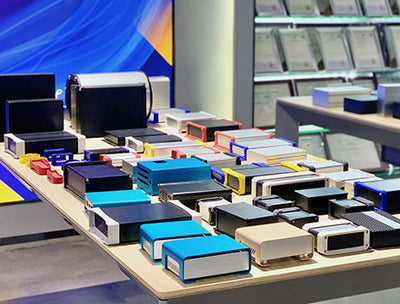
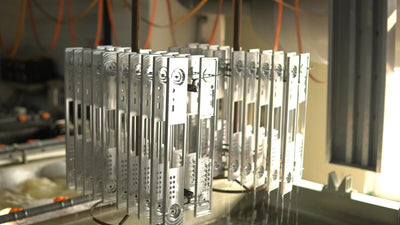
Constructed with a robust, all-aluminum alloy body, these enclosures use an industrial-style design language with striking chamfered edge contrast—giving them a highly technological and premium feel while ensuring maximum safety. Because they are natively built to adapt to standard PXI and PXIE systems, integrating different numbers of data acquisition modules into a single YONGU chassis is entirely straightforward.
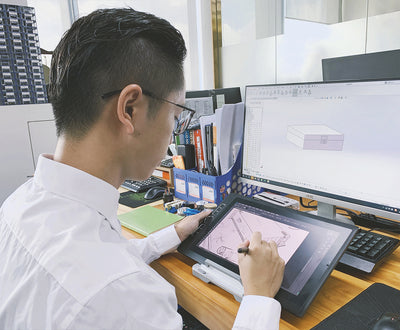
Furthermore, YONGU provides the ultimate flexibility in physical deployment: choose the Basic style for custom integration, the Handle version for desktop mobility, or the Mounting Ear version for immediate cabinet installation. The depth of the chassis and panel cutouts can be flexibly customized, ensuring your specific, sensitive test equipment receives tailored, rock-solid protection without the clutter of a legacy box.
Frequently Asked Questions (FAQ)
1. What makes an industrial PC enclosure different from a standard PC case?
An industrial PC enclosure is built for harsh environments, utilizing robust materials like full-aluminum alloy to resist vibration, dust, and temperature extremes. They are also optimized for standard industrial mounting and specific hardware integrations like PXI/PXIE systems.
2. How does a modular rackmount case save money?
Instead of replacing the entire server case when your internal hardware upgrades, a modular rackmount case allows you to swap only the necessary components (like front/rear panels or internal brackets), extending the lifespan of your physical infrastructure.
3. Can an expandable chassis fit both desktop and cabinet setups?
Yes. Premium models, like the YONGU P-Series, offer interchangeable structural elements. You can attach handles for desktop testing environments, or swap them for mounting ears for secure, flush installation inside standard server racks.
Secure Your Equipment's Future Today
Protecting your delicate industrial modules with a rigid, outdated case is a risk your production line cannot afford. It’s time to upgrade to a system that scales seamlessly alongside your engineering needs. Ready to configure the perfect expandable chassis for your next PXI/PXIE project? Contact us today to discuss your custom dimensions, panel cutouts, and aesthetic requirements with our enclosure experts!