English
 العربية
 Nederlands
 Français
 Deutsch
 Italiano
 日本語
日本語 한국어
한국어 Polski
 Português
 Русский
 Español




The 19 inch rack enclosure became the global standard because it solves three critical engineering problems at once: interoperability, scalability, and deployment efficiency in modern server rack systems.

In data centers, industrial automation rooms, and telecom infrastructure hubs, engineers don’t choose rack systems for aesthetics. They choose them for survival: heat stability, fast maintenance, predictable sizing, and cross-vendor compatibility. That is exactly why the rackmount chassis standard centered around 19 inches has become the invisible backbone of global computing infrastructure.
Why the 19-Inch Standard Dominates Modern Infrastructure
The 19-inch form factor is not arbitrary. It is a precision-driven engineering agreement that allows hardware from different manufacturers to coexist in the same server rack system. Without this standard, every upgrade would become a mechanical puzzle of mismatched dimensions.
Key reasons include:
- Universal compatibility: Devices from different vendors fit into the same rack rails
- Efficient space utilization: Maximizes vertical density in data centers
- Thermal predictability: Airflow paths can be engineered consistently
- Rapid deployment: Plug-and-play infrastructure scaling
Core Pain Points Solved by Rackmount Standardization

Before standardized racks, engineers often faced unpredictable integration failures. Even today, companies migrating legacy systems still encounter these issues:
- Non-standard chassis widths causing installation misalignment
- Overheating due to inconsistent airflow design
- Cable congestion in mixed hardware environments
- High maintenance cost due to incompatible mounting systems
The 19-inch ecosystem resolves these issues by enforcing a shared mechanical language across industries.
Technical Breakdown of a 19-Inch Rack System
Below is a simplified comparison showing why the standardized approach outperforms custom enclosure designs in enterprise environments:
| Feature | 19-Inch Rack Enclosure | Non-Standard Enclosure |
|---|---|---|
| Compatibility | High (multi-vendor support) | Low (single-design dependency) |
| Scalability | Excellent modular expansion | Limited structural flexibility |
| Cooling Efficiency | Optimized airflow channels | Inconsistent thermal design |
| Maintenance | Fast hot-swap accessibility | Time-consuming disassembly |
Where Engineering Meets Real Deployment Scenarios
Imagine a telecom control room deploying dozens of edge computing nodes. Each node must slide seamlessly into a shared cabinet, connect to standardized power rails, and align perfectly with cooling ducts.
This is where high-quality 19 inch rack enclosure design becomes more than mechanical housing. It becomes infrastructure choreography.
In such environments, precision matters down to the millimeter. Even minor deviations can cause vibration issues, airflow turbulence, or cable strain failures over time.
How YONGU Elevates Rackmount Engineering
At this point, standardization alone is not enough. Material quality, structural rigidity, and thermal engineering define long-term system reliability.
This is where :steps in with advanced enclosure engineering designed for demanding applications.
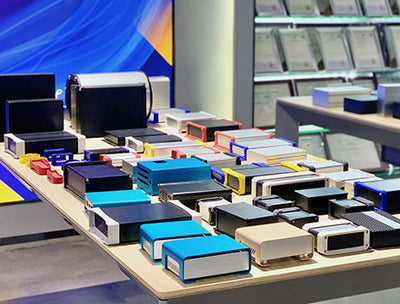
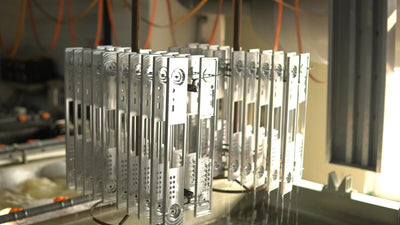
Through its modular rackmount ecosystem, YONGU offers chassis solutions that align with the global rackmount chassis standard, while enhancing durability through precision extruded aluminum structures. Explore the full range here: 19 inch rack enclosure
Instead of forcing engineers to adapt systems to hardware limitations, YONGU designs enclosures that adapt to system complexity. That subtle shift changes everything in high-density computing environments.
Why Standard Rack Systems Improve Efficiency
Industry deployment studies consistently show measurable improvements when using standardized rack systems:
- Up to 35% faster installation time in server deployments
- Reduced maintenance downtime by approximately 20–40%
- Improved airflow efficiency leading to lower cooling costs
- Higher hardware density per square meter of data center space
These improvements compound over time, especially in large-scale infrastructure environments.
FAQ: 19-Inch Rack Enclosures
Q1: What is a 19 inch rack enclosure used for?
It is used to mount servers, networking devices, and industrial electronics in a standardized frame for efficient organization and cooling.
Q2: Why is 19 inches the global standard?
It balances mechanical stability, space efficiency, and cross-brand compatibility across global data center ecosystems.
Q3: Can rackmount systems support non-server equipment?
Yes, they are widely used in telecom, audio systems, industrial control, and testing equipment environments.
Q4: What materials are best for rackmount chassis?
Aluminum alloys are preferred for their strength-to-weight ratio and excellent thermal performance.
Q5: How does YONGU improve rack enclosure design?
YONGU integrates precision extrusion, modular architecture, and industrial-grade durability to support demanding applications.
Final Thought
The dominance of the 19-inch ecosystem is not accidental. It is the result of decades of engineering refinement aimed at solving real-world deployment challenges in server rack systems. When standardization meets precision manufacturing, infrastructure becomes scalable, stable, and future-ready.
If you are planning a server deployment or upgrading your infrastructure architecture, exploring optimized rackmount chassis solutions can significantly improve both performance and lifecycle cost efficiency. Reach out to discuss (export@yonggu-enclosure.com) custom or standard configurations tailored to your project needs.