English
 العربية
 Nederlands
 Français
 Deutsch
 Italiano
 日本語
日本語 한국어
한국어 Polski
 Português
 Русский
 Español




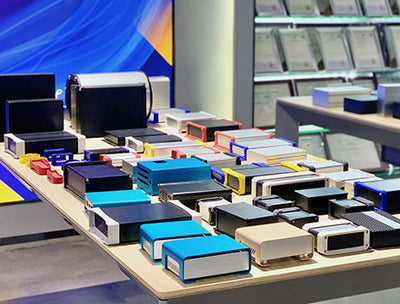
Laboratory test equipment requires more than a protective shell—it needs a precision-engineered housing that supports measurement accuracy, thermal stability, component protection and long-term reliability. A properly designed aluminum instrument enclosure helps equipment manufacturers create professional, durable and functional devices for testing, analysis and measurement applications. YONGU provides customized enclosure solutions that combine aluminum machining, structural design and surface finishing capabilities to meet the requirements of laboratory equipment developers. :contentReference
Why Laboratory Equipment Manufacturers Need Custom Instrument Enclosures
Many laboratory equipment designers face similar challenges during product development. Electronic modules generate heat, sensitive circuits require protection from interference, and users expect compact equipment with an attractive industrial appearance. Standard off-the-shelf cases often cannot satisfy these requirements because laboratory instruments usually involve customized PCB layouts, connectors, displays and mechanical structures.

A custom laboratory equipment case allows engineers to optimize the enclosure according to the actual application. Instead of modifying internal components to fit a standard box, designers can create a housing around the electronics, improving assembly efficiency and reducing unnecessary limitations.
| Laboratory Equipment Requirement | Common Challenge | Custom Aluminum Enclosure Solution |
|---|---|---|
| Thermal management | High-performance electronics generate heat during operation | Aluminum structure improves heat dissipation and supports customized ventilation design |
| Electrical protection | Sensitive circuits may experience electromagnetic interference | Metal housing can support EMI/RFI shielding design |
| Mechanical strength | Frequent transportation or daily laboratory operation | Rigid aluminum construction provides durability with lower weight |
| Product appearance | Generic cases may look unsuitable for professional instruments | Anodizing, machining and printing create a premium appearance |
Key Design Factors for a High-Quality Aluminum Instrument Enclosure
1. Material Selection and Structural Design
Aluminum is widely selected for laboratory equipment housings because it offers a strong balance between strength, weight and machinability. Compared with heavier metal alternatives, aluminum enables manufacturers to create portable testing devices while maintaining structural rigidity.

For desktop laboratory instruments, engineers often need a housing that can support internal mounting plates, control panels, connectors and displays. A custom desktop instrument housing can be designed with accurate dimensions, mounting holes and front-panel layouts to simplify final assembly.
2. Thermal Management Capability
Temperature stability is critical for measurement instruments. Excessive heat inside an enclosure may affect electronic components and measurement performance. Aluminum enclosures naturally assist heat transfer, while customized designs can incorporate ventilation openings, heat sinks or optimized internal spacing.
| Design Element | Impact on Laboratory Equipment |
|---|---|
| Aluminum body | Provides efficient heat conduction and lightweight protection |
| Custom ventilation openings | Improves airflow according to equipment heat generation |
| Internal brackets | Creates organized component installation space |
| Removable panels | Makes maintenance and upgrades easier |
3. Precision Machining and Customization
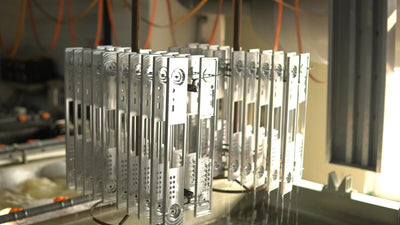
Laboratory instruments usually require precise openings for connectors, displays, switches and measurement interfaces. A small dimensional error can affect assembly efficiency. Custom CNC machining, drilling and panel processing allow enclosure manufacturers to match exact equipment specifications.
YONGU supports customized aluminum enclosure production, including structural adjustments, hole opening, surface treatment and appearance customization. This makes the enclosure suitable for applications such as analyzers, measuring instruments, test systems and electronic laboratory devices.
Applications of Custom Desktop Instrument Housing
A well-designed custom enclosure can improve both product performance and user experience. Typical applications include:
- Electronic measurement instruments
- Laboratory testing equipment
- Power supply testing systems
- Communication testing devices
- Industrial monitoring equipment
- Scientific research instruments
For example, a laboratory equipment manufacturer developing a desktop analyzer may need a compact housing with a front control panel, rear connection ports and internal mounting structures. A customized aluminum enclosure allows the product team to maintain a clean appearance while ensuring convenient operation and maintenance.
With experience in aluminum enclosure manufacturing, YONGU can support projects from prototype development to batch production. The company provides customized solutions including enclosure design assistance, machining processes and surface finishing options to help customers move from concept to finished product.
How to Choose the Right Aluminum Enclosure Supplier
When selecting an enclosure partner, laboratory equipment companies should evaluate several factors:
| Evaluation Factor | What to Consider |
|---|---|
| Customization capability | Can the supplier modify size, structure and interfaces? |
| Manufacturing experience | Does the supplier understand precision equipment requirements? |
| Surface finishing options | Are anodizing, engraving and printing available? |
| Production flexibility | Can the supplier support prototypes and volume orders? |
Choosing a supplier with integrated design and manufacturing capabilities reduces communication costs and helps avoid problems during production. YONGU offers aluminum enclosure solutions with customized design support and flexible production services for different industrial applications. :contentReference[oaicite:3]{index=3}
FAQ About Custom Aluminum Instrument Enclosures
Q1: Why is aluminum commonly used for laboratory equipment cases?
Aluminum provides lightweight construction, good corrosion resistance, excellent machinability and effective heat dissipation, making it suitable for many precision electronic devices.
Q2: Can an aluminum instrument enclosure be customized according to my PCB design?
Yes. Custom enclosure manufacturers can adjust dimensions, mounting structures, openings and internal layouts according to PCB and component requirements.
Q3: What customization services are available for laboratory equipment housings?
Typical services include CNC machining, hole cutting, logo engraving, surface treatment, panel customization and structural optimization.
Q4: Is a custom enclosure suitable for small prototype quantities?
Yes. Flexible manufacturers can support prototype development before moving into larger production quantities.
Build Reliable Laboratory Equipment with YONGU Custom Enclosure Solutions
A professional aluminum enclosure is an important part of laboratory equipment design. The right housing improves protection, thermal performance, appearance and overall product reliability. Whether you are developing a new testing instrument, upgrading an existing device or looking for a reliable manufacturing partner, YONGU can provide customized aluminum enclosure solutions based on your technical requirements.
Contact YONGU today to discuss your laboratory equipment enclosure project, request a customized design solution and receive professional support for your next generation of test equipment.